



How a 16kWh Battery Helps Households Manage Energy Bills

A home solar battery helps address this mismatch. It stores surplus electricity for later use,
allowing households to rely less on grid electricity when solar generation is unavailable.
For solar distributors and installers, a well-sized battery can also create opportunities to offer customers a more complete residential energy solution.
How Can a Home Solar Battery Help Reduce Electricity Costs?
A solar battery does not automatically lower every household's electricity bill. The financial benefit depends on the local electricity tariff, solar generation, household consumption, and how the system is configured.
There are three main ways it can help.
Use more of the solar electricity generated at home
During sunny hours, solar panels may produce more electricity than the household needs. A compatible storage system can direct surplus energy into the battery instead of leaving that energy unused by the household.
The stored electricity can then be used later, reducing the amount of electricity that needs to be purchased from the grid.
Reduce electricity purchases during expensive periods
In markets where electricity prices vary by time of day, households may be able to charge the battery when solar generation is high and use the stored energy during higher-tariff periods.
The actual saving depends on the tariff structure, battery operating settings, and system efficiency. Installers should calculate the expected benefit using the customer's electricity bill rather than promise a fixed saving.
Provide backup power when the grid is unavailable
When paired with a compatible inverter that supports backup operation and correctly configured backup circuits, a home battery can help keep selected household equipment running during a power interruption.
This is an additional value proposition for customers who prioritise electricity continuity, although backup capability alone should not be presented as a guaranteed reduction in normal electricity costs.

16kWh Storage for Residential Energy Systems
For households with higher electricity consumption or larger solar installations, a small battery may not provide the storage capacity they require. The MASON 280L (3.0) offers 16kWh of rated energy in one battery pack.
Its 51.2V architecture and lithium iron phosphate cells provide a defined configuration for residential storage system design.
| Technical Specification | MASON 280L (3.0) |
|---|---|
| Rated energy | 16kWh |
| Nominal voltage | 51.2V |
| Rated capacity | 314Ah |
| Cell configuration | 1P16S |
| Working voltage | 42–58.4V |
| Rated charge/discharge current | 100A at 25 ± 2°C |
| Maximum charge current | 200A at 25 ± 2°C |
| Maximum discharge current | 200A at 25 ± 2°C |
| Cell chemistry | Lithium iron phosphate (LiFePO₄) |
| Communication | CAN / RS485 |
| Dimensions | 817 × 412 × 267mm |
| Weight | 113kg ± 3kg |
| Operating temperature | Charging: 0–40°C; discharging: -20–40°C |
| Enclosure rating | IP20 |
| Parallel connection | Up to 16 units |
| Specified cycle life |
6,000 cycles under stated test conditions
|
Capacity for Household Energy Management
A 16kWh battery gives installers a larger storage option for homes that need to shift more solar energy from daytime to evening consumption.
It may be considered for households with substantial evening electricity use, larger solar PV systems, or a requirement to maintain selected loads during grid interruptions. However, 16kWh should not be treated as a guaranteed usable energy figure or a fixed number of hours of backup. Actual available energy depends on system settings, conversion losses, load demand, and operating conditions.
For distributors, offering a clearly defined 16kWh model can help address residential projects that require more storage than entry-level battery configurations.

BMS Monitoring and Parallel Expansion
The MASON 280L (3.0) uses a SEPLOS Smart BMS. Its functions include cell voltage and temperature monitoring, cell balancing, current limiting, and protection against conditions such as overvoltage, undervoltage, overcurrent, and short circuits. The system can also store up to 500 historical fault records.
CAN and RS485 communication interfaces support connection with compatible equipment. Buyers should confirm the inverter communication protocol, pin definitions, and cable requirements before confirming system compatibility.
Up to 16 battery packs can be connected in parallel according to the specification. This provides a route to larger storage configurations for projects that require additional capacity. The inverter, protection devices, wiring, and installation design must all support the selected arrangement.
The specified cycle life is 6,000 cycles at 25°C, using a 100A charge and discharge current and 80% depth of discharge. This is a test-condition figure, not a guaranteed service life under every household usage pattern.
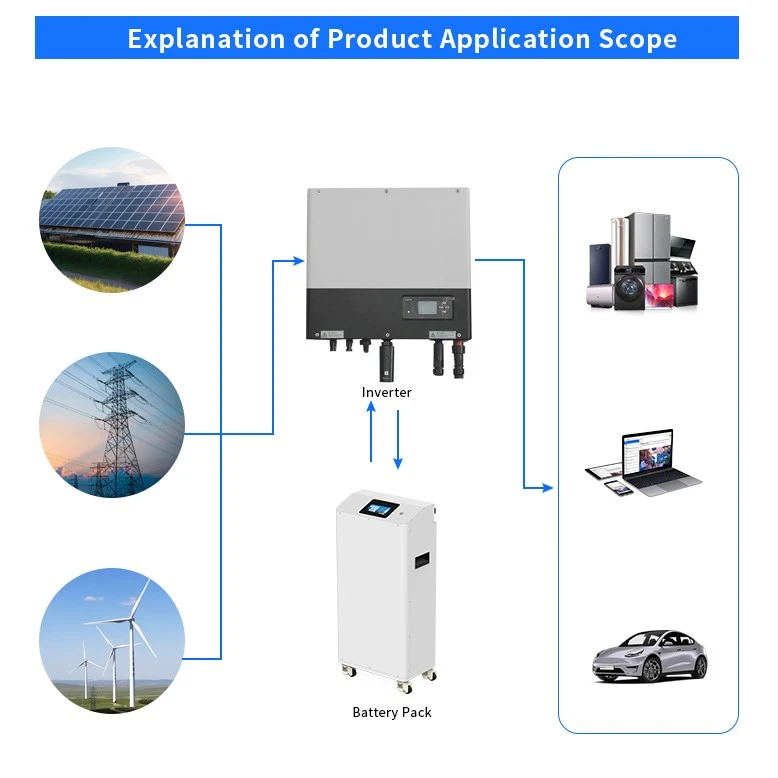
Power reaches the end user
After the required conversion and control stages, electricity can supply connected loads such as household appliances and electronic equipment. The system may also be configured to support other suitable loads, depending on inverter capacity, electrical design and available stored energy.
The battery does not independently power AC appliances or manage grid interaction. Those functions depend on the inverter, system controls, protection devices and installation design. An electric vehicle should not be assumed to charge directly from this battery; any such application would require a specifically designed and compatible charging system.
What Home Solar Battery Buyers Need to Consider Before Quoting
For importers and residential solar distributors, the challenge is not simply finding a battery with a large capacity. The product must suit local household demand and the installation conditions in the target market.
Before preparing a quotation, check:
Household electricity use: Review daily consumption and identify when the household uses the most electricity.
Solar PV capacity: Confirm whether the solar installation can generate enough surplus energy to charge the battery.
Electricity tariff: Check whether the local pricing structure makes stored solar energy financially beneficial.
Inverter compatibility: Verify voltage range, charging and discharging current limits, and communication requirements.
Installation space: The battery measures 817 × 412 × 267mm and weighs approximately 113kg. Its mounting arrangement and supporting structure require proper assessment.
Installation environment: The IP20 enclosure is intended for a suitable indoor installation, not direct exposure to outdoor weather.
These checks help avoid undersized or unsuitable systems, reduce quotation revisions, and give installers a more reliable basis for explaining the expected household benefits.
Tenz Energy supplies battery solutions for residential, commercial, and industrial energy storage markets. The MASON 280L (3.0) provides a 16kWh rated-energy option for buyers developing residential solar storage products and projects.
For distributors and installers, selecting the right battery means balancing household energy requirements, local electricity prices, inverter compatibility, and installation conditions. A technically suitable configuration is the starting point for a realistic cost-saving proposal.
Contact Tenz Energy with your target market, inverter model, and residential project requirements to discuss product suitability and supply cooperation.
Discuss Your Home Solar Storage Project
Visit Tenz Energy for more information about its energy storage products and OEM/ODM services.
Hot Tags: solar batteries for home cost, China solar batteries for home cost manufacturers, suppliers, factory