

Battery Integration for Electrical Energy Storage Systems

The battery configuration affects how an electrical energy storage system is installed, connected, and expanded. Equipment layout, electrical limits, communication wiring, and service access all need to be considered before the system is assembled.
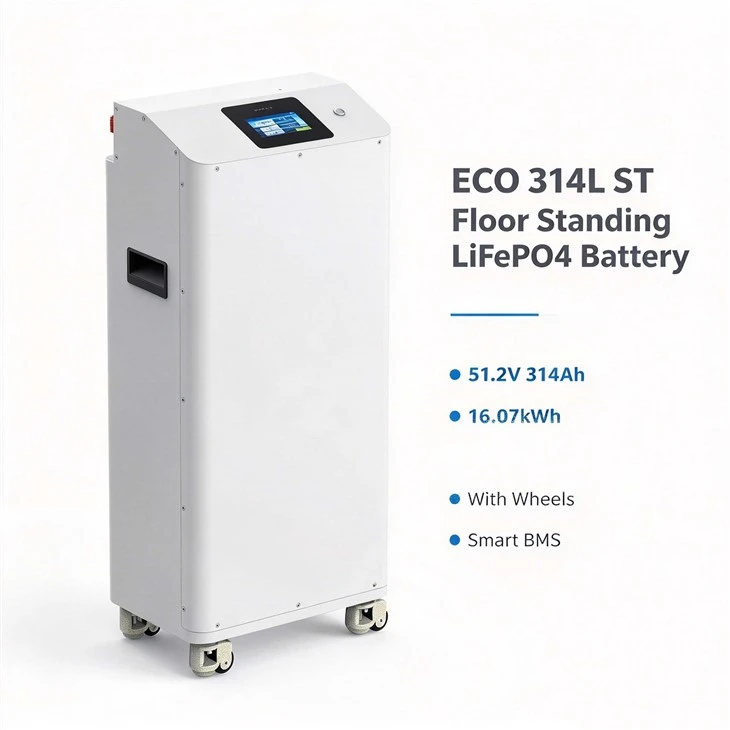
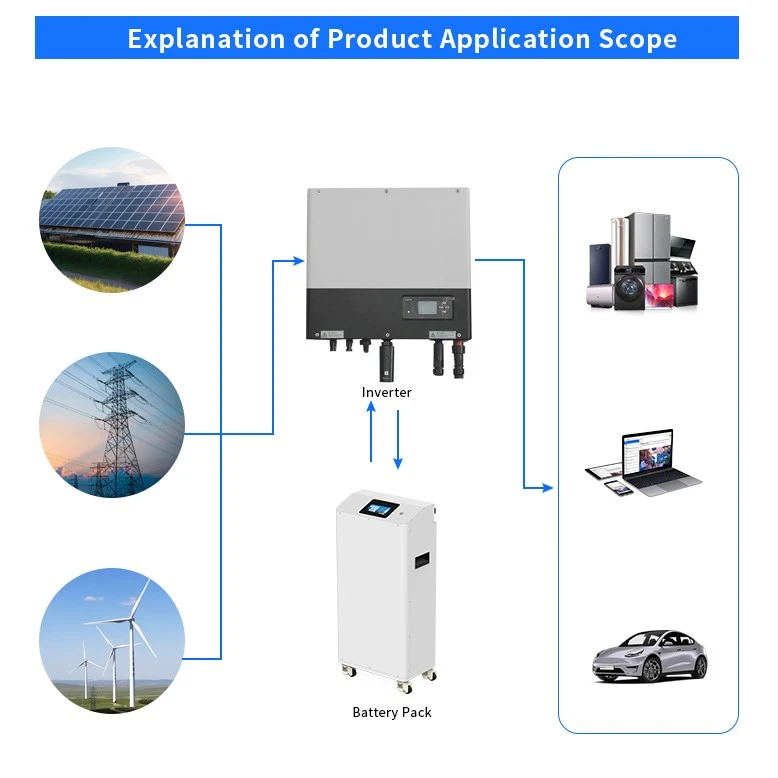
The Tenz Energy ECO-314L-(ST) is a lithium-ion battery for integration into electrical energy storage projects. Each unit provides 51.2V nominal voltage, 314Ah rated capacity, and 16.0768kWh nominal energy. Its CAN and RS485 interfaces support communication with compatible system equipment, while parallel connection allows storage capacity to be increased within the product's specified limits.
For system integrators, the main task is to select an installation arrangement that fits the required capacity and the electrical design, rather than treating the battery as a standalone power system.

Installation Configurations
Single-unit installation
A single battery can serve as the basic storage unit in a project where its nominal capacity and electrical ratings meet the design requirements. Before installation, allow for the unit's dimensions of 890.5 × 420 × 267mm and weight of 120kg ± 3kg. The supporting surface, handling route, cable access, and space for inspection should be assessed in advance.
Parallel battery installation
For projects requiring greater nominal storage capacity, the ECO-314L-(ST) supports up to 16 units connected in parallel. This configuration can be planned as a battery bank, with the physical layout arranged to suit the available equipment area and the requirements for power and communication cabling.
| Number of units | Nominal energy |
|---|---|
| 1 | 16.0768kWh |
| 4 | 64.3072kWh |
| 8 | 128.6144kWh |
| 16 | 257.2288kWh |
The figures are calculated from the nominal energy per unit. They do not represent guaranteed usable energy. Parallel installations require appropriate cable sizing, electrical protection, communication configuration, and confirmation that the connected equipment supports the complete battery arrangement. Series connection and mixing this model with other battery brands or models are not permitted by the specification.
Protected equipment-area installation
The battery has an IP20 rating and is not specified as weatherproof. The installation plan should therefore provide a suitable protected environment rather than assume direct outdoor use. Temperature, moisture exposure, supporting structure, and access for maintenance should be evaluated for the actual site.
The specified ambient temperature range is 0–40°C during charging and −20–40°C during discharging. The recommended temperature for optimal operation is 10–30°C.
Electrical and Communication Requirements
The battery must be integrated within the operating limits of the complete electrical system.
| Parameter | Specification |
|---|---|
| Model | ECO-314L-(ST) |
| Battery type | Lithium-ion |
| Configuration | 1P16S |
| Nominal voltage | 51.2V |
| Nominal capacity | 314Ah |
| Nominal energy | 16.0768kWh |
| Operating voltage range | 43.2–58.4V |
| Standard charge/discharge current | 100A at 25 ± 2°C |
| Maximum charge/discharge current | 200A at 25 ± 2°C |
| Communication | CAN and RS485 |
| Maximum parallel units | 16 |
| Dimensions | 890.5 × 420 × 267mm |
| Weight | 120kg ± 3kg |
| IP rating | IP20 |
| Operating altitude | 0–3,000m |
The installer should verify the connected equipment's voltage range, current limits, communication protocol, and wiring requirements before commissioning. The available specification does not identify specific compatible inverter models, so compatibility must be confirmed for the proposed system.
The battery's BMS provides cell-voltage monitoring, temperature sensing, cell balancing, current limiting, and protection functions. These features support battery management but do not replace system-level electrical protection.
Frequently Asked Questions
Can this battery be used in different electrical energy storage system layouts?
It can be evaluated for single-unit or parallel configurations, subject to the product's electrical limits and installation requirements. The suitability of a particular layout depends on the complete system design.
Can the storage capacity be expanded?
Yes. The specification allows up to 16 units in parallel. The inverter, cabling, protection devices, and communication arrangement must be suitable for the final configuration.
What cycle life is specified?
The specification lists 8,000 cycles at 25°C, 100A charge/discharge current, and 70% depth of discharge (DOD). Actual results depend on operating conditions.
Is the battery suitable for direct outdoor installation?
The IP20 rating does not establish weatherproof protection. Outdoor suitability should not be assumed.
Electrical Energy Storage System Enquiries
Hot Tags: electrical energy storage systems, China electrical energy storage systems manufacturers, suppliers, factory