

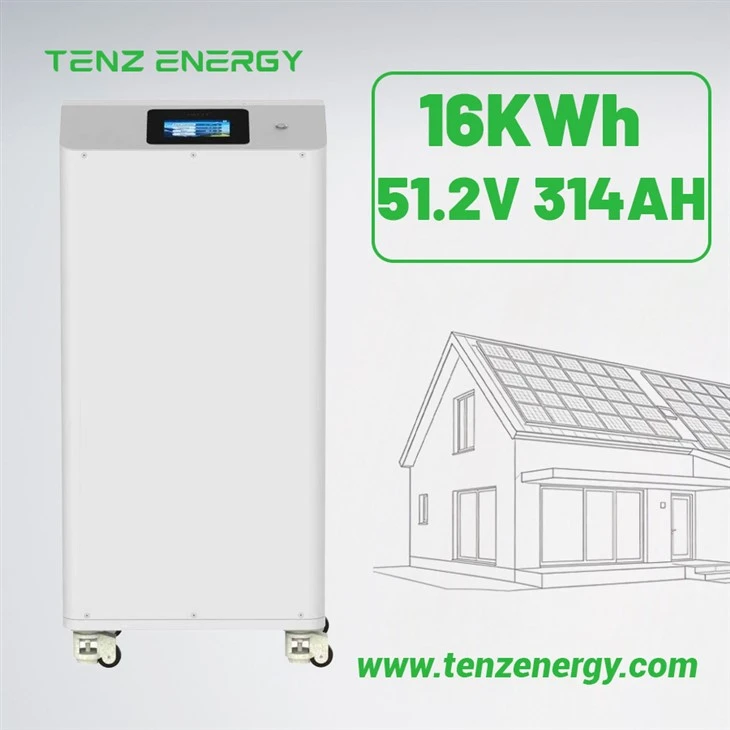


Product Overview

For solar installations, battery selection is not just about storage capacity. The battery must fit the available installation space, connect correctly with the inverter, and support the site's daily energy requirements. This model uses a 16S1P configuration with an intelligent battery management system (BMS), CAN and RS485 communication, and support for up to 16 units connected in parallel.
Its installation-oriented design makes it an option for projects that need substantial storage capacity per unit without starting with a large number of smaller battery modules.
Choose the Right Installation Setup

Choose the Right Installation Setup
Floor-Standing Installation for Home Solar Storage
For homes with a dedicated utility room, garage, or energy storage area, a floor-standing installation can make the battery easier to access during commissioning and maintenance. The ECO-314L-(ST) measures 890.5 × 420 × 267mm and weighs approximately 120kg, so the installation area should be planned before delivery.
A level, load-bearing, non-combustible surface is recommended. Leave sufficient clearance around the unit for heat dissipation and future inspection. The specification does not approve multi-layer stacking, so batteries should not be installed on top of one another.
This setup is worth considering for homes with rooftop solar panels that need to store surplus daytime generation for later use. The final system capacity and inverter configuration should be selected according to household consumption, solar output, and backup requirements.
Utility-Room Installation for Retrofit Solar Systems
In an existing property, the available space often determines where the battery can be installed. A dedicated utility room may offer a practical location when the floor can support the unit's weight and the surrounding area meets the battery's installation requirements.
Before installation, check the room dimensions, access route, ventilation, temperature conditions, cable routing, and distance from the inverter and distribution equipment. The battery should be installed in a dry, ventilated area away from fire sources and flammable materials.
The ECO-314L-(ST) has an IP20 rating. It should therefore be installed in a suitable protected indoor environment rather than treated as a weatherproof outdoor battery. Outdoor installation requires an appropriately designed protective enclosure, and suitability must be confirmed for the actual site conditions.
Parallel Installation for Larger Solar Storage Capacity
For projects that need more stored energy, the ECO-314L-(ST) supports parallel connection of up to 16 battery units. This allows system designers to increase nominal storage capacity as project requirements grow.
| Number of units | Nominal energy |
|---|---|
| 1 | 16.0768kWh |
| 2 | 32.1536kWh |
| 4 | 64.3072kWh |
| 8 | 128.6144kWh |
| 16 | 257.2288kWh |
These figures are calculated by multiplying the nominal energy of one unit by the number of units. They represent nominal battery energy, not guaranteed usable energy or AC energy delivered to loads. Actual system performance depends on operating limits, inverter conversion, system settings, and installation conditions.
Parallel systems require appropriate power-cable sizing, communication wiring, protection coordination, and inverter compatibility. This model is not permitted to be connected in series or mixed with batteries of other brands or models. The complete system design should be confirmed before installation.
Battery Specifications
| Parameter | Specification |
|---|---|
| Model | ECO-314L-(ST) |
| Battery type | Lithium-ion |
| Cell configuration | 1P16S |
| Nominal voltage | 51.2V |
| Nominal capacity | 314Ah |
| Nominal energy | 16.0768kWh |
| Operating voltage range | 43.2–58.4V |
| Standard charge/discharge current | 100A at 25 ± 2°C |
| Maximum charge current | 200A at 25 ± 2°C |
| Maximum discharge current | 200A at 25 ± 2°C |
| Communication | CAN and RS485 |
| Maximum parallel units | 16 |
| Dimensions (L × W × H) | 890.5 × 420 × 267mm |
| Weight | 120kg ± 3kg |
| IP rating | IP20 |
| Cycle life | 8,000 cycles under specified test conditions |
| Operating ambient temperature | 0–40°C charging; −20–40°C discharging |
| Operating altitude | 0–3,000m |
Cycle-life note: The specification lists 8,000 cycles at 25°C, a 100A charge/discharge current, and 70% depth of discharge (DOD). Actual service life depends on operating conditions and system settings.
BMS and Inverter Communication
A solar storage battery needs to communicate correctly with the inverter so the system can manage charging and discharging within the battery's operating limits.
The ECO-314L-(ST) includes CAN and RS485 communication interfaces. Before installation, the installer should confirm that the selected inverter supports the battery's communication protocol and that the interface pin definitions match. Some inverters may require a specially wired communication cable; a standard network cable should not be assumed to work with every inverter.
For systems using multiple batteries, the BMS supports automatic address assignment for parallel communication. The installation team should follow the specified communication wiring sequence and confirm that the master battery communicates with the inverter.
The battery also includes cell-voltage monitoring, temperature sensing, cell balancing, current limiting, and protection functions. It records historical fault information, helping installers investigate abnormal operating conditions during commissioning or service.
Installation Checks Before Commissioning
A properly planned installation can prevent avoidable delays and connection problems. Before powering up the solar storage system, the installer should:
Confirm that the battery model and condition match the project requirements.
Check the installation surface, room temperature, ventilation, and available clearance.
Verify the inverter's battery-voltage range, charge settings, current limits, and communication compatibility.
Check the polarity of all power connections and confirm the communication wiring.
Make sure the battery is shut down before connecting the harnesses.
Avoid connecting or disconnecting power connectors while the battery is operating.
Complete commissioning in accordance with the battery and inverter manufacturers' instructions.
The specification recommends an installation temperature of 10–30°C for optimal operation. The stated operating ambient range is 0–40°C during charging and −20–40°C during discharging; these are different conditions and should not be treated as a single unrestricted temperature range.
Is This Lithium Ion Battery Suitable for Your Solar Project?
The ECO-314L-(ST) is worth evaluating when a project requires a 51.2V battery system with 16.0768kWh nominal energy per unit and the option to expand through parallel connection.
For a residential solar installation, the key questions are whether the available space can accommodate a 120kg unit, whether the inverter is compatible, and how much energy the household needs after sunset. For a small or medium-sized commercial project, the design should also account for load profile, peak demand, required backup duration, and the number of battery units needed.
The battery's 200A maximum charge and discharge current should not be interpreted as a promise that every inverter or system can operate continuously at that current. Confirm the applicable operating limits and protection settings with the system designer.
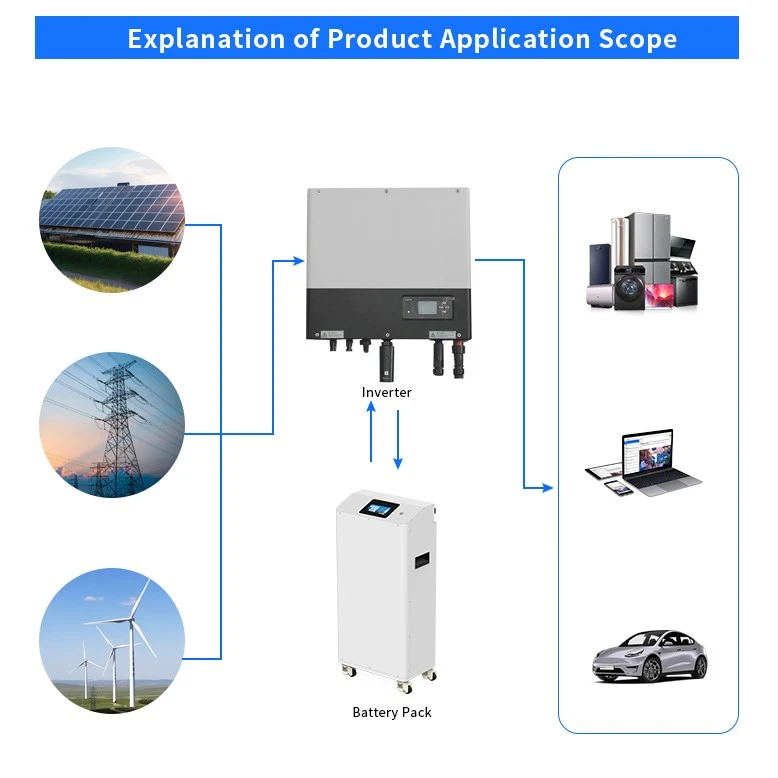
This model is not a complete solar power system by itself. Solar panels, an appropriate inverter, electrical protection, cabling, and any required monitoring or control equipment must be selected for the specific project.
Discuss Your Home Solar Storage Project
Hot Tags: lithium ion battery for solar storage, China lithium ion battery for solar storage manufacturers, suppliers, factory