



Product Overview

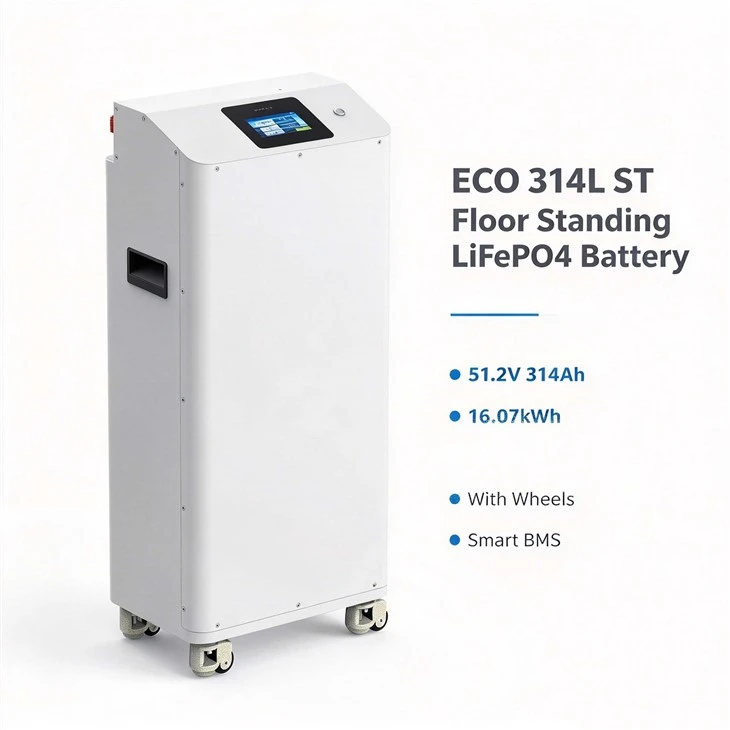
Renewable energy storage systems need batteries that can be integrated into the site layout, matched with the power conversion equipment, and expanded when energy demand increases. The Tenz Energy ECO-314L-(ST) is a 51.2V lithium-ion battery system designed for residential and small to medium-sized commercial energy storage applications.
Each unit provides 314Ah capacity and 16.0768kWh nominal energy. With support for up to 16 units connected in parallel, the system gives installers flexibility to plan storage capacity around the project rather than relying on a single fixed battery size.
The battery uses a 16S1P configuration and an intelligent battery management system (BMS). CAN and RS485 interfaces support communication with compatible equipment, while built-in monitoring and protection functions help manage battery operation.
For renewable energy projects, the main consideration is how the battery fits into the complete system: where it will be installed, how power cables and communication lines will be routed, and whether the selected inverter supports the required battery settings.

Installation Options for Renewable Energy Storage Systems
Indoor Floor-Supported Installation
For residential properties and commercial sites with a dedicated equipment room, the ECO-314L-(ST) can be assessed for a floor-supported installation. Its dimensions are 890.5 × 420 × 267mm, and its weight is approximately 120kg. These figures should be checked against the available floor area, access route, and the site's load-bearing requirements before delivery.
Choose a level, non-combustible surface and allow enough space around the battery for heat dissipation, cable access, and inspection.
The specification does not permit batteries to be stacked in multiple layers, so the layout should provide an individual installation position for each unit.
This arrangement may suit renewable energy systems where the battery is installed near the inverter and electrical distribution equipment. Keeping the battery, inverter, and protection devices within a planned equipment area can make cable routing and commissioning easier, provided all manufacturer clearance and electrical requirements are met.
Dedicated Battery Area for Residential Projects
In a home energy storage project, the battery location should be decided alongside the inverter location and the route from the solar system's electrical equipment. A dedicated indoor area can help keep the installation organized and provide access for system checks.
Before selecting the location, consider the battery's 120kg weight, the dimensions of the unit, the temperature range, ventilation, and the distance required for power and communication cables. The manufacturer's installation guidance recommends a temperature of 10–30°C for optimal operation and a dry, ventilated location away from fire sources and flammable materials.
The ECO-314L-(ST) has an IP20 rating. It is not specified as a weatherproof battery, so it should not be placed in an exposed outdoor location. If a project requires outdoor installation, the suitability of a protective enclosure and the complete installation arrangement must be assessed separately.
Parallel Battery Layout for Larger Systems
Some renewable energy storage systems need more capacity than one battery can provide. The ECO-314L-(ST) supports up to 16 units in parallel, allowing the nominal storage capacity to increase as the project requires.
| Battery units | Combined nominal energy |
|---|---|
| 1 | 16.0768kWh |
| 2 | 32.1536kWh |
| 4 | 64.3072kWh |
| 8 | 128.6144kWh |
| 16 | 257.2288kWh |
These figures are calculated from the nominal energy rating of one battery. They do not represent guaranteed usable energy or the amount of AC electricity delivered to equipment. Actual energy available to the load depends on operating limits, inverter losses, system settings, and site conditions.
A multi-unit installation requires careful planning of the battery positions, power connections, communication wiring, and protection arrangements. The specification prohibits series connection and mixing the battery with other brands or models. The complete configuration should therefore be checked before installation rather than adding units without reviewing system compatibility.
Key Specifications
| Parameter | Specification |
|---|---|
| Model | ECO-314L-(ST) |
| Battery type | Lithium-ion |
| Configuration | 1P16S |
| Nominal voltage | 51.2V |
| Nominal capacity | 314Ah |
| Nominal energy | 16.0768kWh |
| Operating voltage range | 43.2–58.4V |
| Standard charge/discharge current | 100A at 25 ± 2°C |
| Maximum charge current | 200A at 25 ± 2°C |
| Maximum discharge current | 200A at 25 ± 2°C |
| Communication interfaces | CAN and RS485 |
| Maximum parallel connection | 16 units |
| Dimensions (L × W × H) | 890.5 × 420 × 267mm |
| Weight | 120kg ± 3kg |
| IP rating | IP20 |
| Operating ambient temperature | 0–40°C for charging; −20–40°C for discharging |
| Operating altitude | 0–3,000m |
| Cycle life | 8,000 cycles under specified test conditions |
The specified cycle-life condition is 25°C, 100A charge/discharge current, and 70% depth of discharge (DOD). Actual results depend on the operating environment and system configuration.
Connecting the Battery to Renewable Energy Equipment
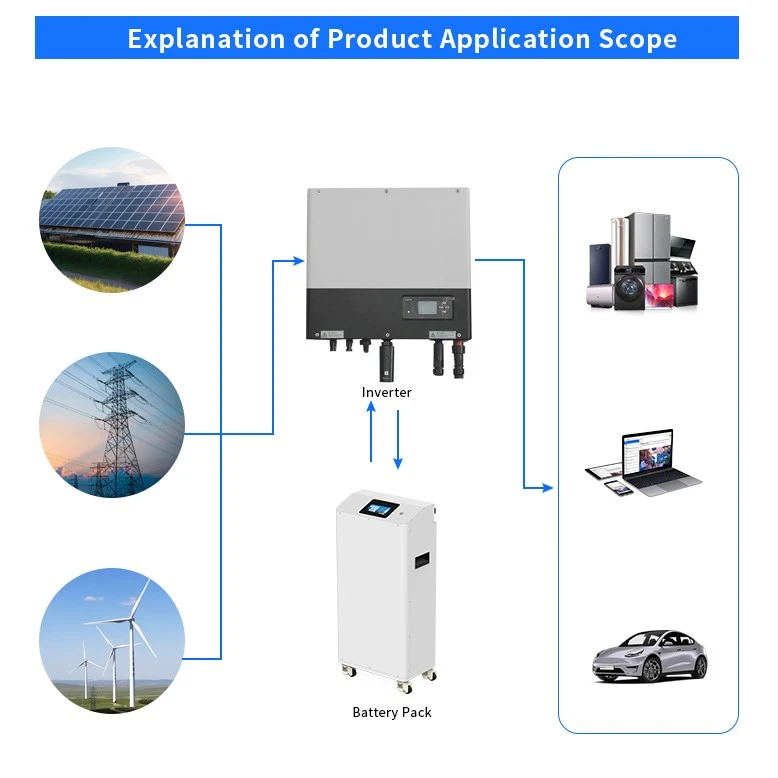
A renewable energy storage system works as a coordinated installation. The battery, inverter, electrical protection, cabling, and control equipment must be selected to operate within compatible electrical limits.
The ECO-314L-(ST) provides CAN and RS485 communication interfaces. Before ordering or commissioning, confirm that the chosen inverter supports the battery's communication protocol and that the connector pin definitions are correct. Some inverter models may require a specially wired communication cable, so a standard network cable should not be assumed to be compatible in every case.
For parallel installations, the BMS supports automatic address assignment. The installer should follow the specified communication wiring sequence and ensure that the host battery's communication connection is correctly linked to the inverter.
The BMS monitors cell voltage and temperature and includes cell balancing, current limiting, and protection functions. It can also retain historical fault records, which may help with fault investigation during commissioning and service.
These features support battery management, but they do not replace correct system design, suitable electrical protection, or commissioning by qualified personnel.
Planning Storage Capacity Around the Project
Battery capacity should be selected according to the energy the site needs to store and use, not only the rated capacity of the battery.
For a residential system, review household electricity consumption, solar generation, evening demand, and the intended backup loads. For a small or medium-sized commercial installation, the assessment may also need to account for the site's operating schedule, load profile, required backup duration, and future demand.
One ECO-314L-(ST) unit provides 16.0768kWh nominal energy. Where the project requires greater nominal capacity, parallel connection can increase the total. The number of units should be determined after checking the inverter's battery requirements, charging and discharging limits, available installation space, and electrical design.
The battery's maximum charge and discharge current is specified as 200A. This does not mean every inverter or installation can operate continuously at that current. Confirm the applicable limits and settings for the complete system before finalizing the design.
The ECO-314L-(ST) is a battery system, not a complete renewable energy installation. Solar panels, an appropriate inverter, protection devices, cables, and any required monitoring equipment must be specified separately according to the project.
Installation and Commissioning Checklist
Before putting the system into service, the installer should:
Check the battery model, external condition, and supplied accessories.
Confirm the installation area, floor support, temperature, ventilation, and required clearances.
Verify inverter compatibility, voltage range, charge/discharge settings, and communication protocol.
Confirm power-cable sizing, connector polarity, and communication wiring.
Make sure the battery is shut down before connecting its harnesses.
Never connect or disconnect the power connectors while the battery is operating.
Complete commissioning in line with the battery and inverter manufacturers' instructions.
The specified ambient operating range is 0–40°C during charging and −20–40°C during discharging. These limits apply to different operating modes and should not be treated as one interchangeable range.
Discuss Your Home Solar Storage Project
Hot Tags: renewable energy storage systems, China renewable energy storage systems manufacturers, suppliers, factory