

Electric motorcycles are becoming an important part of the global electric mobility industry.
They are used for personal transportation, delivery fleets, commercial mobility, and shared transportation services.
As adoption grows, battery technology is becoming a key factor in vehicle performance, operating costs, and customer experience.
For electric motorcycle manufacturers and battery buyers, several trends deserve attention.
1. Battery Demand Is Expanding with Electric Mobility
The growth of electric mobility is increasing demand for rechargeable batteries across different vehicle categories.
The IEA reported that global lithium-ion battery deployment in 2025 was six times higher than in 2020. Electric vehicles accounted for more than 70% of total deployment.
Although this figure covers the wider EV market rather than electric motorcycles alone, it shows the scale of the battery industry's expansion.
For electric motorcycle manufacturers, the opportunity is supported by several applications:
Urban commuting.
Food and parcel delivery.
Commercial fleets.
Shared mobility.
Battery-swapping networks.
2. Battery Swapping Is Creating New Requirements
Traditional charging requires riders to wait while batteries recharge.
Battery swapping offers an alternative: users exchange a depleted battery for a charged one at a designated station.
This model can be especially useful for delivery riders and commercial fleets, where vehicle downtime affects daily revenue.
One market estimate from Mordor Intelligence valued the global electric two-wheeler battery-swapping market at approximately USD 460 million in 2025 and projected it to reach USD 1.25 billion by 2031. This is a third-party forecast, not an official industry census.
Share, Manufacturers & Size
Battery swapping also creates additional technical requirements.
A swappable battery may need:
Standardized dimensions and connectors.
Mechanical locking structures.
Communication between the battery and vehicle.
SOC and temperature monitoring.
BMS protection and identification.
Compatibility with charging cabinets.
For battery manufacturers, these requirements make customization and system integration increasingly important.
3. LFP and NMC Will Serve Different Vehicle Requirements
Battery chemistry is another important consideration.
LFP batteries offer thermal stability and long cycle-life potential, making them attractive for some commercial and fleet applications.
NMC batteries generally offer higher energy density, which can help reduce battery weight and size.
The choice depends on vehicle design.
|
Requirement |
LFP |
NMC |
|---|---|---|
|
Energy density |
Generally lower |
Generally higher |
|
Thermal stability |
Generally better |
Requires careful thermal management |
|
Cycle-life potential |
Generally longer |
Depends on cell design |
|
Cost structure |
Generally competitive |
More exposed to nickel and cobalt costs |
|
Typical consideration |
Service life and cost |
Weight and compact design |
Manufacturers should compare actual cell datasheets rather than relying only on chemistry-level descriptions.
4. Smart BMS Functions Are Becoming More Important
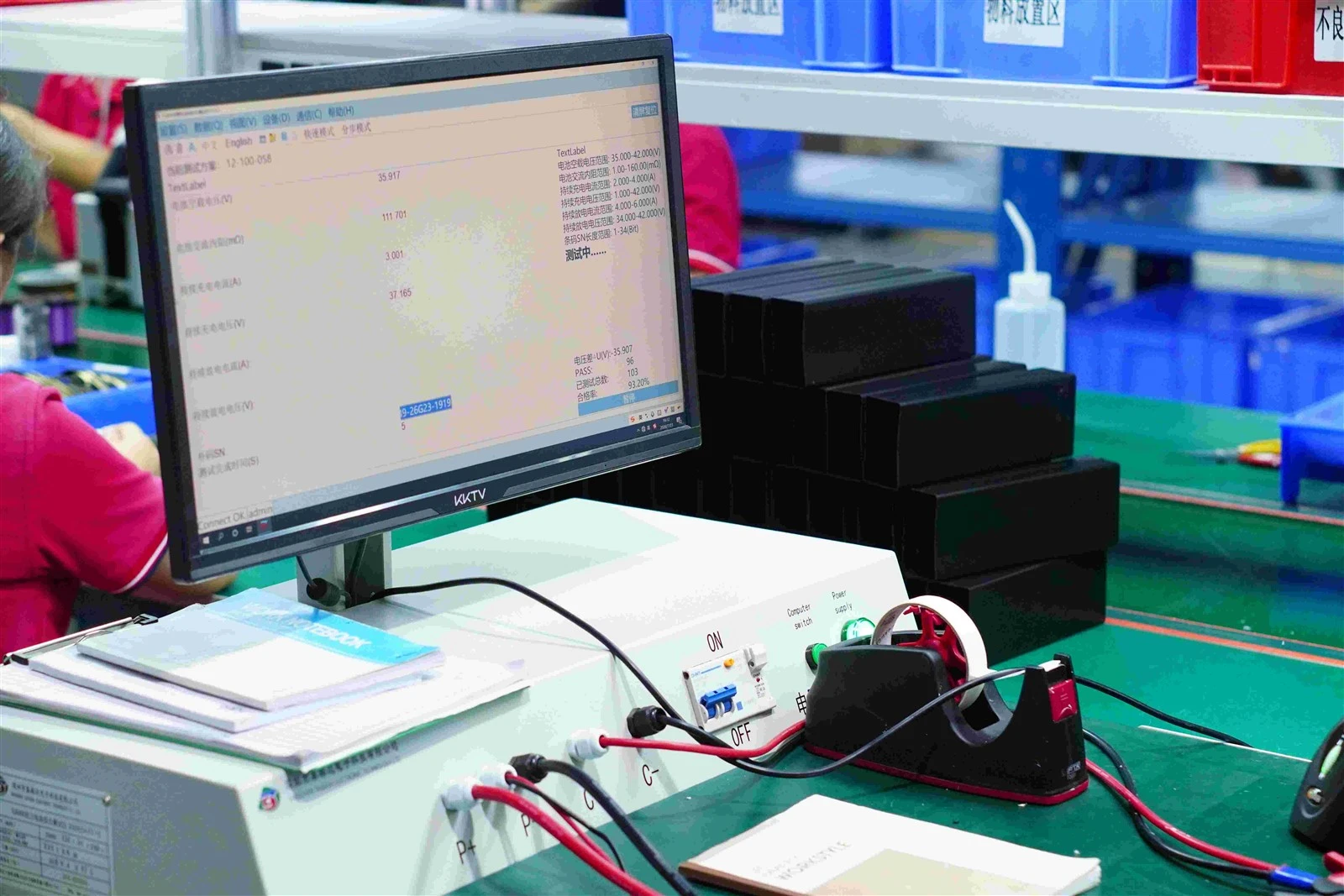
Modern electric motorcycle batteries need more than basic overcharge and over-discharge protection.
For fleet and swapping applications, smart BMS functions can help operators monitor battery conditions and manage assets.
Relevant functions include:
State of Charge (SOC).
State of Health (SOH).
Temperature monitoring.
Overcurrent and short-circuit protection.
Bluetooth or communication interfaces.
CAN, RS485, or UART communication.
For battery-swapping operators, communication compatibility with the vehicle and charging cabinet is particularly important.
A battery may have sufficient capacity but still fail to integrate smoothly if its communication protocol is incompatible with the wider system.
5. Battery Customization Will Matter More for OEM Buyers
Electric motorcycle manufacturers often have different vehicle platforms.
Battery packs may need to fit specific frames, battery compartments, connectors, and controller requirements.
Important customization parameters include:
Nominal voltage and capacity.
Continuous and peak discharge current.
Battery dimensions and weight.
Connector and wiring design.
BMS functions and communication.
Enclosure protection.
Charging requirements.
For OEM projects, early communication between the vehicle manufacturer and battery supplier can reduce redesign costs and compatibility problems.
6. Buyers Will Focus More on Total Operating Cost
For fleet operators, the initial battery purchase price is only one part of the total cost.
Battery life, charging frequency, downtime, maintenance, replacement intervals, and warranty support all influence operating expenses.
A lower-priced battery may not provide the best long-term value if it cannot meet the fleet's daily operating requirements.
Before purchasing, buyers should request test data under clearly defined conditions and evaluate the battery in the actual vehicle.
Conclusion
The future of electric motorcycle batteries will be shaped by battery swapping, smart BMS technology, chemistry selection, and customized battery design.
For manufacturers and fleet operators, choosing a battery supplier with application-specific engineering and stable production capabilities is becoming increasingly important.
TENZ Energy provides customized electric motorcycle battery packs, battery cells, and BMS solutions for OEM manufacturers, fleet operators, and mobility projects. Contact our team to discuss your vehicle specifications and battery requirements.
https://www.tianchine.com/motorcycle-battery/52v-lithium-battery-pack-replacement-lithium.html
https://www.tianchine.com/motorcycle-battery/60v-electric-motorbike-battery-custom-branded.html